mohan-bee/mini-mp3-player
Portable, battery-powered MP3 player hardware with USB charging, microSD storage, an MCU, VS10xx audio decoder, headphone output, status controls, and regulated power rails.
- Version
- 1.2.0
- License
- unset
- Stars
- 0
firmware/vendor/wch/Peripheral/src/ch32v20x_can.c
/********************************** (C) COPYRIGHT  *******************************
 * File Name          : ch32v20x_can.c
 * Author             : WCH
 * Version            : V1.0.1
 * Date               : 2025/04/26
 * Description        : This file provides all the CAN firmware functions.
*********************************************************************************
* Copyright (c) 2021 Nanjing Qinheng Microelectronics Co., Ltd.
* Attention: This software (modified or not) and binary are used for
* microcontroller manufactured by Nanjing Qinheng Microelectronics.
*******************************************************************************/
#include "ch32v20x_can.h"
#include "ch32v20x_rcc.h"

/* CAN CTLR Register bits */
#define CTLR_DBF                     ((uint32_t)0x00010000)

/* CAN Mailbox Transmit Request */
#define TMIDxR_TXRQ                  ((uint32_t)0x00000001)

/* CAN FCTLR Register bits */
#define FCTLR_FINIT                  ((uint32_t)0x00000001)

/* Time out for INAK bit */
#define INAK_TIMEOUT                 ((uint32_t)0x0000FFFF)
/* Time out for SLAK bit */
#define SLAK_TIMEOUT                 ((uint32_t)0x0000FFFF)


/* Flags in TSTATR register */
#define CAN_FLAGS_TSTATR             ((uint32_t)0x08000000)
/* Flags in RFIFO1 register */
#define CAN_FLAGS_RFIFO1             ((uint32_t)0x04000000)
/* Flags in RFIFO0 register */
#define CAN_FLAGS_RFIFO0             ((uint32_t)0x02000000)
/* Flags in STATR register */
#define CAN_FLAGS_STATR              ((uint32_t)0x01000000)
/* Flags in ERRSR register */
#define CAN_FLAGS_ERRSR              ((uint32_t)0x00F00000)

/* Mailboxes definition */
#define CAN_TXMAILBOX_0              ((uint8_t)0x00)
#define CAN_TXMAILBOX_1              ((uint8_t)0x01)
#define CAN_TXMAILBOX_2              ((uint8_t)0x02)


#define CAN_MODE_MASK                ((uint32_t) 0x00000003)

static ITStatus CheckITStatus(uint32_t CAN_Reg, uint32_t It_Bit);


/*********************************************************************
 * @fn      CAN_DeInit
 *
 * @brief   Deinitializes the CAN peripheral registers to their default reset
 *        values.
 *
 * @param   CANx - where x can be 1 to select the CAN peripheral.
 *
 * @return  none
 */
void CAN_DeInit(CAN_TypeDef* CANx)
{
	if (CANx == CAN1)
	{
		RCC_APB1PeriphResetCmd(RCC_APB1Periph_CAN1, ENABLE);
		RCC_APB1PeriphResetCmd(RCC_APB1Periph_CAN1, DISABLE);
	}
}

/*********************************************************************
 * @fn      CAN_Init
 *
 * @brief   Initializes the CAN peripheral according to the specified
 *        parameters in the CAN_InitStruct.
 *
 * @param   CANx - where x can be 1 to select the CAN peripheral.
 *          CAN_InitStruct - pointer to a CAN_InitTypeDef structure that
 *        contains the configuration information for the CAN peripheral.
 *
 * @return  InitStatus - CAN InitStatus state.
*             CAN_InitStatus_Failed.
*             CAN_InitStatus_Success.
 */
uint8_t CAN_Init(CAN_TypeDef* CANx, CAN_InitTypeDef* CAN_InitStruct)
{
	uint8_t InitStatus = CAN_InitStatus_Failed;
	uint32_t wait_ack = 0x00000000;

	CANx->CTLR &= (~(uint32_t)CAN_CTLR_SLEEP);
	CANx->CTLR |= CAN_CTLR_INRQ ;

	while (((CANx->STATR & CAN_STATR_INAK) != CAN_STATR_INAK) && (wait_ack != INAK_TIMEOUT))
	{
		wait_ack++;
	}

	if ((CANx->STATR & CAN_STATR_INAK) != CAN_STATR_INAK)
	{
		InitStatus = CAN_InitStatus_Failed;
	}
	else
	{
		if (CAN_InitStruct->CAN_TTCM == ENABLE)
		{
			CANx->CTLR |= CAN_CTLR_TTCM;
		}
		else
		{
			CANx->CTLR &= ~(uint32_t)CAN_CTLR_TTCM;
		}

		if (CAN_InitStruct->CAN_ABOM == ENABLE)
		{
			CANx->CTLR |= CAN_CTLR_ABOM;
		}
		else
		{
			CANx->CTLR &= ~(uint32_t)CAN_CTLR_ABOM;
		}

		if (CAN_InitStruct->CAN_AWUM == ENABLE)
		{
			CANx->CTLR |= CAN_CTLR_AWUM;
		}
		else
		{
			CANx->CTLR &= ~(uint32_t)CAN_CTLR_AWUM;
		}

		if (CAN_InitStruct->CAN_NART == ENABLE)
		{
			CANx->CTLR |= CAN_CTLR_NART;
		}
		else
		{
			CANx->CTLR &= ~(uint32_t)CAN_CTLR_NART;
		}

		if (CAN_InitStruct->CAN_RFLM == ENABLE)
		{
			CANx->CTLR |= CAN_CTLR_RFLM;
		}
		else
		{
			CANx->CTLR &= ~(uint32_t)CAN_CTLR_RFLM;
		}

		if (CAN_InitStruct->CAN_TXFP == ENABLE)
		{
			CANx->CTLR |= CAN_CTLR_TXFP;
		}
		else
		{
			CANx->CTLR &= ~(uint32_t)CAN_CTLR_TXFP;
		}

		CANx->BTIMR = (uint32_t)((uint32_t)CAN_InitStruct->CAN_Mode << 30) | \
								((uint32_t)CAN_InitStruct->CAN_SJW << 24) | \
								((uint32_t)CAN_InitStruct->CAN_BS1 << 16) | \
								((uint32_t)CAN_InitStruct->CAN_BS2 << 20) | \
								((uint32_t)CAN_InitStruct->CAN_Prescaler - 1);
		CANx->CTLR &= ~(uint32_t)CAN_CTLR_INRQ;
		wait_ack = 0;

		while (((CANx->STATR & CAN_STATR_INAK) == CAN_STATR_INAK) && (wait_ack != INAK_TIMEOUT))
		{
			wait_ack++;
		}

		if ((CANx->STATR & CAN_STATR_INAK) == CAN_STATR_INAK)
		{
			InitStatus = CAN_InitStatus_Failed;
		}
		else
		{
			InitStatus = CAN_InitStatus_Success ;
		}
	}

	return InitStatus;
}

/*********************************************************************
 * @fn      CAN_FilterInit
 *
 * @brief   Initializes the CAN peripheral according to the specified
 *        parameters in the CAN_FilterInitStruct.
 *
 * @param   CAN_FilterInitStruct - pointer to a CAN_FilterInitTypeDef
 *        structure that contains the configuration information.
 *
 * @return  none
 */
void CAN_FilterInit(CAN_FilterInitTypeDef* CAN_FilterInitStruct)
{
	uint32_t filter_number_bit_pos = 0;

	filter_number_bit_pos = ((uint32_t)1) << CAN_FilterInitStruct->CAN_FilterNumber;
	CAN1->FCTLR |= FCTLR_FINIT;
	CAN1->FWR &= ~(uint32_t)filter_number_bit_pos;

	if (CAN_FilterInitStruct->CAN_FilterScale == CAN_FilterScale_16bit)
	{
		CAN1->FSCFGR &= ~(uint32_t)filter_number_bit_pos;

		CAN1->sFilterRegister[CAN_FilterInitStruct->CAN_FilterNumber].FR1 =
		((0x0000FFFF & (uint32_t)CAN_FilterInitStruct->CAN_FilterMaskIdLow) << 16) |
				(0x0000FFFF & (uint32_t)CAN_FilterInitStruct->CAN_FilterIdLow);

		CAN1->sFilterRegister[CAN_FilterInitStruct->CAN_FilterNumber].FR2 =
		((0x0000FFFF & (uint32_t)CAN_FilterInitStruct->CAN_FilterMaskIdHigh) << 16) |
				(0x0000FFFF & (uint32_t)CAN_FilterInitStruct->CAN_FilterIdHigh);
	}

	if (CAN_FilterInitStruct->CAN_FilterScale == CAN_FilterScale_32bit)
	{
		CAN1->FSCFGR |= filter_number_bit_pos;

		CAN1->sFilterRegister[CAN_FilterInitStruct->CAN_FilterNumber].FR1 =
		((0x0000FFFF & (uint32_t)CAN_FilterInitStruct->CAN_FilterIdHigh) << 16) |
				(0x0000FFFF & (uint32_t)CAN_FilterInitStruct->CAN_FilterIdLow);

		CAN1->sFilterRegister[CAN_FilterInitStruct->CAN_FilterNumber].FR2 =
		((0x0000FFFF & (uint32_t)CAN_FilterInitStruct->CAN_FilterMaskIdHigh) << 16) |
				(0x0000FFFF & (uint32_t)CAN_FilterInitStruct->CAN_FilterMaskIdLow);
	}

#if defined (CH32V20x_D6)
	if(((*(uint32_t *) 0x40022030) & 0x0F000000) == 0)
	{
		uint32_t i;

		for(i = 0; i < 64; i++)
		{
			*(__IO uint16_t *)(0x40006000 + 512 + 4 * i) = *(__IO uint16_t *)(0x40006000 + 768 + 4 * i);
		}
	}

#endif


#if defined (CH32V20x_D8)
	RCC->AHBPCENR |= (1<<17);
	*(vu32*)0x400250A0 = 0x55aaaa55;

	if(*(vu32*)0x400250A0 != 0x55aaaa55)
	{
        uint32_t i;

        for(i = 0; i < 64; i++)
        {
            *(__IO uint16_t *)(0x40006000 + 512 + 4 * i) = *(__IO uint16_t *)(0x40006000 + 768 + 4 * i);
        }
	}

	RCC->AHBPCENR &= ~(1<<17);

#endif


	if (CAN_FilterInitStruct->CAN_FilterMode == CAN_FilterMode_IdMask)
	{
		CAN1->FMCFGR &= ~(uint32_t)filter_number_bit_pos;
	}
	else
	{
		CAN1->FMCFGR |= (uint32_t)filter_number_bit_pos;
	}

	if (CAN_FilterInitStruct->CAN_FilterFIFOAssignment == CAN_Filter_FIFO0)
	{
		CAN1->FAFIFOR &= ~(uint32_t)filter_number_bit_pos;
	}

	if (CAN_FilterInitStruct->CAN_FilterFIFOAssignment == CAN_Filter_FIFO1)
	{
		CAN1->FAFIFOR |= (uint32_t)filter_number_bit_pos;
	}

	if (CAN_FilterInitStruct->CAN_FilterActivation == ENABLE)
	{
		CAN1->FWR |= filter_number_bit_pos;
	}

	CAN1->FCTLR &= ~FCTLR_FINIT;
}

/*********************************************************************
 * @fn      CAN_StructInit
 *
 * @brief   Fills each CAN_InitStruct member with its default value.
 *
 * @param   CAN_InitStruct - pointer to a CAN_InitTypeDef structure which
 *        will be initialized.
 *
 * @return  none
 */
void CAN_StructInit(CAN_InitTypeDef* CAN_InitStruct)
{
	CAN_InitStruct->CAN_TTCM = DISABLE;
	CAN_InitStruct->CAN_ABOM = DISABLE;
	CAN_InitStruct->CAN_AWUM = DISABLE;
	CAN_InitStruct->CAN_NART = DISABLE;
	CAN_InitStruct->CAN_RFLM = DISABLE;
	CAN_InitStruct->CAN_TXFP = DISABLE;
	CAN_InitStruct->CAN_Mode = CAN_Mode_Normal;
	CAN_InitStruct->CAN_SJW = CAN_SJW_1tq;
	CAN_InitStruct->CAN_BS1 = CAN_BS1_4tq;
	CAN_InitStruct->CAN_BS2 = CAN_BS2_3tq;
	CAN_InitStruct->CAN_Prescaler = 1;
}

/*********************************************************************
 * @fn      CAN_SlaveStartBank
 *
 * @brief   This function applies only to CH32 Connectivity line devices.
 *
 * @param   CAN_BankNumber - Select the start slave bank filter from 1..27.
 *
 * @return  none
 */
void CAN_SlaveStartBank(uint8_t CAN_BankNumber)
{
	CAN1->FCTLR |= FCTLR_FINIT;
	CAN1->FCTLR &= (uint32_t)0xFFFFC0F1 ;
	CAN1->FCTLR |= (uint32_t)(CAN_BankNumber)<<8;
	CAN1->FCTLR &= ~FCTLR_FINIT;
}

/*********************************************************************
 * @fn      CAN_DBGFreeze
 *
 * @brief   Enables or disables the DBG Freeze for CAN.
 *
 * @param   CANx - where x can be 1 to select the CAN peripheral.
 *          NewState - ENABLE or DISABLE.
 *
 * @return  none
 */
void CAN_DBGFreeze(CAN_TypeDef* CANx, FunctionalState NewState)
{
	if (NewState != DISABLE)
	{
		CANx->CTLR |= CTLR_DBF;
	}
	else
	{
		CANx->CTLR &= ~CTLR_DBF;
	}
}

/*********************************************************************
 * @fn      CAN_TTComModeCmd
 *
 * @brief   Enables or disabes the CAN Time TriggerOperation communication mode.
 *
 * @param   CANx - where x can be 1 to select the CAN peripheral.
 *          NewState - ENABLE or DISABLE.
 *          Note-
 *          DLC must be programmed as 8 in order Time Stamp (2 bytes) to be
 *          sent over the CAN bus.
 *
 * @return  none
 */
void CAN_TTComModeCmd(CAN_TypeDef* CANx, FunctionalState NewState)
{
	if (NewState != DISABLE)
	{
		CANx->CTLR |= CAN_CTLR_TTCM;

		CANx->sTxMailBox[0].TXMDTR |= ((uint32_t)CAN_TXMDT0R_TGT);
		CANx->sTxMailBox[1].TXMDTR |= ((uint32_t)CAN_TXMDT1R_TGT);
		CANx->sTxMailBox[2].TXMDTR |= ((uint32_t)CAN_TXMDT2R_TGT);
	}
	else
	{
		CANx->CTLR &= (uint32_t)(~(uint32_t)CAN_CTLR_TTCM);

		CANx->sTxMailBox[0].TXMDTR &= ((uint32_t)~CAN_TXMDT0R_TGT);
		CANx->sTxMailBox[1].TXMDTR &= ((uint32_t)~CAN_TXMDT1R_TGT);
		CANx->sTxMailBox[2].TXMDTR &= ((uint32_t)~CAN_TXMDT2R_TGT);
	}
}

/*********************************************************************
 * @fn      CAN_Transmit
 *
 * @brief   Initiates the transmission of a message.
 *
 * @param   CANx - where x can be 1 to select the CAN peripheral.
 *          TxMessage - pointer to a structure which contains CAN Id, CAN
 *        DLC and CAN data.
 *
 * @return  transmit_mailbox - The number of the mailbox that is used for
 *        transmission or CAN_TxStatus_NoMailBox if there is no empty mailbox.
 */
uint8_t CAN_Transmit(CAN_TypeDef* CANx, CanTxMsg* TxMessage)
{
	uint8_t transmit_mailbox = 0;

	if ((CANx->TSTATR&CAN_TSTATR_TME0) == CAN_TSTATR_TME0)
	{
		transmit_mailbox = 0;
	}
	else if ((CANx->TSTATR&CAN_TSTATR_TME1) == CAN_TSTATR_TME1)
	{
		transmit_mailbox = 1;
	}
	else if ((CANx->TSTATR&CAN_TSTATR_TME2) == CAN_TSTATR_TME2)
	{
		transmit_mailbox = 2;
	}
	else
	{
		transmit_mailbox = CAN_TxStatus_NoMailBox;
	}

	if (transmit_mailbox != CAN_TxStatus_NoMailBox)
	{
		CANx->sTxMailBox[transmit_mailbox].TXMIR &= TMIDxR_TXRQ;
		if (TxMessage->IDE == CAN_Id_Standard)
		{
			CANx->sTxMailBox[transmit_mailbox].TXMIR |= ((TxMessage->StdId << 21) | \
														TxMessage->RTR);
		}
		else
		{
			CANx->sTxMailBox[transmit_mailbox].TXMIR |= ((TxMessage->ExtId << 3) | \
														TxMessage->IDE | \
														TxMessage->RTR);
		}

		TxMessage->DLC &= (uint8_t)0x0000000F;
		CANx->sTxMailBox[transmit_mailbox].TXMDTR &= (uint32_t)0xFFFFFFF0;
		CANx->sTxMailBox[transmit_mailbox].TXMDTR |= TxMessage->DLC;

		CANx->sTxMailBox[transmit_mailbox].TXMDLR = (((uint32_t)TxMessage->Data[3] << 24) |
													 ((uint32_t)TxMessage->Data[2] << 16) |
													 ((uint32_t)TxMessage->Data[1] << 8) |
													 ((uint32_t)TxMessage->Data[0]));
		CANx->sTxMailBox[transmit_mailbox].TXMDHR = (((uint32_t)TxMessage->Data[7] << 24) |
													((uint32_t)TxMessage->Data[6] << 16) |
													((uint32_t)TxMessage->Data[5] << 8) |
													((uint32_t)TxMessage->Data[4]));
		CANx->sTxMailBox[transmit_mailbox].TXMIR |= TMIDxR_TXRQ;
	}

	return transmit_mailbox;
}

/*********************************************************************
 * @fn      CAN_TransmitStatus
 *
 * @brief   Checks the transmission of a message.
 *
 * @param   CANx - where x can be 1 to select the CAN peripheral.
 *          TransmitMailbox - the number of the mailbox that is used for
 *        transmission.
 *
 * @return  state -
 *            CAN_TxStatus_Ok.
 *            CAN_TxStatus_Failed.
 */
uint8_t CAN_TransmitStatus(CAN_TypeDef* CANx, uint8_t TransmitMailbox)
{
	uint32_t state = 0;

	switch (TransmitMailbox)
	{
		case (CAN_TXMAILBOX_0):
			state = CANx->TSTATR & (CAN_TSTATR_RQCP0 | CAN_TSTATR_TXOK0 | CAN_TSTATR_TME0);
			break;

		case (CAN_TXMAILBOX_1):
			state = CANx->TSTATR & (CAN_TSTATR_RQCP1 | CAN_TSTATR_TXOK1 | CAN_TSTATR_TME1);
			break;

		case (CAN_TXMAILBOX_2):
			state = CANx->TSTATR & (CAN_TSTATR_RQCP2 | CAN_TSTATR_TXOK2 | CAN_TSTATR_TME2);
			break;

		default:
			state = CAN_TxStatus_Failed;
			break;
	}

	switch (state)
	{
		case (0x0):
			state = CAN_TxStatus_Pending;
			break;

		 case (CAN_TSTATR_RQCP0 | CAN_TSTATR_TME0):
			state = CAN_TxStatus_Failed;
			break;

		 case (CAN_TSTATR_RQCP1 | CAN_TSTATR_TME1):
			state = CAN_TxStatus_Failed;
			break;

		 case (CAN_TSTATR_RQCP2 | CAN_TSTATR_TME2):
			state = CAN_TxStatus_Failed;
			break;

		case (CAN_TSTATR_RQCP0 | CAN_TSTATR_TXOK0 | CAN_TSTATR_TME0):
			state = CAN_TxStatus_Ok;
			break;

		case (CAN_TSTATR_RQCP1 | CAN_TSTATR_TXOK1 | CAN_TSTATR_TME1):
			state = CAN_TxStatus_Ok;
			break;

		case (CAN_TSTATR_RQCP2 | CAN_TSTATR_TXOK2 | CAN_TSTATR_TME2):
			state = CAN_TxStatus_Ok;
			break;

		default:
			state = CAN_TxStatus_Failed;
			break;
	}

	return (uint8_t) state;
}

/*********************************************************************
 * @fn      CAN_CancelTransmit
 *
 * @brief   Cancels a transmit request.
 *
 * @param   CANx - where x can be 1 to select the CAN peripheral.
 *          Mailbox -  Mailbox number.
 *            CAN_TXMAILBOX_0.
 *            CAN_TXMAILBOX_1.
 *            CAN_TXMAILBOX_2.
 *
 * @return  none
 */
void CAN_CancelTransmit(CAN_TypeDef* CANx, uint8_t Mailbox)
{
	switch (Mailbox)
	{
		case (CAN_TXMAILBOX_0):
			CANx->TSTATR |= CAN_TSTATR_ABRQ0;
			break;

		case (CAN_TXMAILBOX_1):
			CANx->TSTATR |= CAN_TSTATR_ABRQ1;
			break;

		case (CAN_TXMAILBOX_2):
			CANx->TSTATR |= CAN_TSTATR_ABRQ2;
			break;

		default:
			break;
	}
}

/*********************************************************************
 * @fn      CAN_Receive
 *
 * @brief   Receives a message.
 *
 * @param   CANx - where x can be 1 to select the CAN peripheral.
 *          FIFONumber - Receive FIFO number.
 *            CAN_FIFO0.
 *            CAN_FIFO1.
 *          RxMessage -  pointer to a structure receive message which contains
 *        CAN Id, CAN DLC, CAN datas and FMI number.
 *
 * @return  none
 */
void CAN_Receive(CAN_TypeDef* CANx, uint8_t FIFONumber, CanRxMsg* RxMessage)
{
	RxMessage->IDE = (uint8_t)0x04 & CANx->sFIFOMailBox[FIFONumber].RXMIR;

	if (RxMessage->IDE == CAN_Id_Standard)
	{
		RxMessage->StdId = (uint32_t)0x000007FF & (CANx->sFIFOMailBox[FIFONumber].RXMIR >> 21);
	}
	else
	{
		RxMessage->ExtId = (uint32_t)0x1FFFFFFF & (CANx->sFIFOMailBox[FIFONumber].RXMIR >> 3);
	}

	RxMessage->RTR = (uint8_t)0x02 & CANx->sFIFOMailBox[FIFONumber].RXMIR;
	RxMessage->DLC = (uint8_t)0x0F & CANx->sFIFOMailBox[FIFONumber].RXMDTR;
	RxMessage->FMI = (uint8_t)0xFF & (CANx->sFIFOMailBox[FIFONumber].RXMDTR >> 8);
	RxMessage->Data[0] = (uint8_t)0xFF & CANx->sFIFOMailBox[FIFONumber].RXMDLR;
	RxMessage->Data[1] = (uint8_t)0xFF & (CANx->sFIFOMailBox[FIFONumber].RXMDLR >> 8);
	RxMessage->Data[2] = (uint8_t)0xFF & (CANx->sFIFOMailBox[FIFONumber].RXMDLR >> 16);
	RxMessage->Data[3] = (uint8_t)0xFF & (CANx->sFIFOMailBox[FIFONumber].RXMDLR >> 24);
	RxMessage->Data[4] = (uint8_t)0xFF & CANx->sFIFOMailBox[FIFONumber].RXMDHR;
	RxMessage->Data[5] = (uint8_t)0xFF & (CANx->sFIFOMailBox[FIFONumber].RXMDHR >> 8);
	RxMessage->Data[6] = (uint8_t)0xFF & (CANx->sFIFOMailBox[FIFONumber].RXMDHR >> 16);
	RxMessage->Data[7] = (uint8_t)0xFF & (CANx->sFIFOMailBox[FIFONumber].RXMDHR >> 24);

	if (FIFONumber == CAN_FIFO0)
	{
		CANx->RFIFO0 |= CAN_RFIFO0_RFOM0;
	}
	else
	{
		CANx->RFIFO1 |= CAN_RFIFO1_RFOM1;
	}
}

/*********************************************************************
 * @fn      CAN_FIFORelease
 *
 * @brief   Releases the specified FIFO.
 *
 * @param   CANx - where x can be 1 to select the CAN peripheral.
 *          FIFONumber - Receive FIFO number.
 *            CAN_FIFO0.
 *            CAN_FIFO1.
 *
 * @return  none
 */
void CAN_FIFORelease(CAN_TypeDef* CANx, uint8_t FIFONumber)
{
	if (FIFONumber == CAN_FIFO0)
	{
		CANx->RFIFO0 |= CAN_RFIFO0_RFOM0;
	}
	else
	{
		CANx->RFIFO1 |= CAN_RFIFO1_RFOM1;
	}
}

/*********************************************************************
 * @fn      CAN_MessagePending
 *
 * @brief   Returns the number of pending messages.
 *
 * @param   CANx - where x can be 1 to select the CAN peripheral.
 *          FIFONumber - Receive FIFO number.
 *            CAN_FIFO0.
 *            CAN_FIFO1.
 *
 * @return  message_pending: which is the number of pending message.
 */
uint8_t CAN_MessagePending(CAN_TypeDef* CANx, uint8_t FIFONumber)
{
	uint8_t message_pending=0;

	if (FIFONumber == CAN_FIFO0)
	{
		message_pending = (uint8_t)(CANx->RFIFO0&(uint32_t)0x03);
	}
	else if (FIFONumber == CAN_FIFO1)
	{
		message_pending = (uint8_t)(CANx->RFIFO1&(uint32_t)0x03);
	}
	else
	{
		message_pending = 0;
	}

	return message_pending;
}

/*********************************************************************
 * @fn      CAN_OperatingModeRequest
 *
 * @brief   Select the CAN Operation mode.
 *
 * @param   CANx - where x can be 1 to select the CAN peripheral.
 *          CAN_OperatingMode - CAN Operating Mode.
 *            CAN_OperatingMode_Initialization.
 *            CAN_OperatingMode_Normal.
 *            CAN_OperatingMode_Sleep.
 *
 * @return  status -
 *          CAN_ModeStatus_Failed - CAN failed entering the specific mode.
 *          CAN_ModeStatus_Success - CAN Succeed entering the specific mode.
 */
uint8_t CAN_OperatingModeRequest(CAN_TypeDef* CANx, uint8_t CAN_OperatingMode)
{
	uint8_t status = CAN_ModeStatus_Failed;
	uint32_t timeout = INAK_TIMEOUT;

	if (CAN_OperatingMode == CAN_OperatingMode_Initialization)
	{
		CANx->CTLR = (uint32_t)((CANx->CTLR & (uint32_t)(~(uint32_t)CAN_CTLR_SLEEP)) | CAN_CTLR_INRQ);

		while (((CANx->STATR & CAN_MODE_MASK) != CAN_STATR_INAK) && (timeout != 0))
		{
			timeout--;
		}
		if ((CANx->STATR & CAN_MODE_MASK) != CAN_STATR_INAK)
		{
			status = CAN_ModeStatus_Failed;
		}
		else
		{
			status = CAN_ModeStatus_Success;
		}
	}
	else if (CAN_OperatingMode == CAN_OperatingMode_Normal)
	{
		CANx->CTLR &= (uint32_t)(~(CAN_CTLR_SLEEP|CAN_CTLR_INRQ));

		while (((CANx->STATR & CAN_MODE_MASK) != 0) && (timeout!=0))
		{
			timeout--;
		}
		if ((CANx->STATR & CAN_MODE_MASK) != 0)
		{
			status = CAN_ModeStatus_Failed;
		}
		else
		{
			status = CAN_ModeStatus_Success;
		}
	}
	else if (CAN_OperatingMode == CAN_OperatingMode_Sleep)
	{
		CANx->CTLR = (uint32_t)((CANx->CTLR & (uint32_t)(~(uint32_t)CAN_CTLR_INRQ)) | CAN_CTLR_SLEEP);

		while (((CANx->STATR & CAN_MODE_MASK) != CAN_STATR_SLAK) && (timeout!=0))
		{
			timeout--;
		}
		if ((CANx->STATR & CAN_MODE_MASK) != CAN_STATR_SLAK)
		{
			status = CAN_ModeStatus_Failed;
		}
		else
		{
			status = CAN_ModeStatus_Success;
		}
	}
	else
	{
		status = CAN_ModeStatus_Failed;
	}

	return  (uint8_t) status;
}

/*********************************************************************
 * @fn      CAN_Sleep
 *
 * @brief   Enters the low power mode.
 *
 * @param   CANx - where x can be 1 to select the CAN peripheral.
 *
 * @return  sleepstatus -
 *            CAN_Sleep_Ok.
 *            CAN_Sleep_Failed.
 */
uint8_t CAN_Sleep(CAN_TypeDef* CANx)
{
	uint8_t sleepstatus = CAN_Sleep_Failed;

	CANx->CTLR = (((CANx->CTLR) & (uint32_t)(~(uint32_t)CAN_CTLR_INRQ)) | CAN_CTLR_SLEEP);

	if ((CANx->STATR & (CAN_STATR_SLAK|CAN_STATR_INAK)) == CAN_STATR_SLAK)
	{
		sleepstatus =  CAN_Sleep_Ok;
	}

	return (uint8_t)sleepstatus;
}

/*********************************************************************
 * @fn      CAN_WakeUp
 *
 * @brief   Wakes the CAN up.
 *
 * @param   CANx - where x can be 1 to select the CAN peripheral.
 *
 * @return  wakeupstatus -
 *            CAN_WakeUp_Ok.
 *            CAN_WakeUp_Failed.
 */
uint8_t CAN_WakeUp(CAN_TypeDef* CANx)
{
	uint32_t wait_slak = SLAK_TIMEOUT;
	uint8_t wakeupstatus = CAN_WakeUp_Failed;

	CANx->CTLR &= ~(uint32_t)CAN_CTLR_SLEEP;

	while(((CANx->STATR & CAN_STATR_SLAK) == CAN_STATR_SLAK)&&(wait_slak!=0x00))
	{
	 wait_slak--;
	}
	if((CANx->STATR & CAN_STATR_SLAK) != CAN_STATR_SLAK)
	{
		wakeupstatus = CAN_WakeUp_Ok;
	}

	return (uint8_t)wakeupstatus;
}

/*********************************************************************
 * @fn      CAN_GetLastErrorCode
 *
 * @brief   Returns the CANx's last error code (LEC).
 *
 * @param   CANx - where x can be 1 to select the CAN peripheral.
 *
 * @return  errorcode - specifies the Error code.
 *            CAN_ErrorCode_NoErr - No Error.
 *            CAN_ErrorCode_StuffErr - Stuff Error.
 *            CAN_ErrorCode_FormErr - Form Error.
 *            CAN_ErrorCode_ACKErr - Acknowledgment Error.
 *            CAN_ErrorCode_BitRecessiveErr - Bit Recessive Error.
 *            CAN_ErrorCode_BitDominantErr - Bit Dominant Error.
 *            CAN_ErrorCode_CRCErr - CRC Error.
 *            CAN_ErrorCode_SoftwareSetErr - Software Set Error.
 */
uint8_t CAN_GetLastErrorCode(CAN_TypeDef* CANx)
{
	uint8_t errorcode=0;

	errorcode = (((uint8_t)CANx->ERRSR) & (uint8_t)CAN_ERRSR_LEC);

	return errorcode;
}

/*********************************************************************
 * @fn      CAN_GetReceiveErrorCounter
 *
 * @brief   Returns the CANx Receive Error Counter (REC).
 *
 * @param   CANx - where x can be 1 to select the CAN peripheral.
 *         Note-
 *         In case of an error during reception, this counter is incremented
 *         by 1 or by 8 depending on the error condition as defined by the CAN
 *         standard. After every successful reception, the counter is
 *         decremented by 1 or reset to 120 if its value was higher than 128.
 *         When the counter value exceeds 127, the CAN controller enters the
 *         error passive state.
 * @return  counter - CAN Receive Error Counter.
 */
uint8_t CAN_GetReceiveErrorCounter(CAN_TypeDef* CANx)
{
	uint8_t counter=0;

	counter = (uint8_t)((CANx->ERRSR & CAN_ERRSR_REC)>> 24);

	return counter;
}

/*********************************************************************
 * @fn      CAN_GetLSBTransmitErrorCounter
 *
 * @brief   Returns the LSB of the 9-bit CANx Transmit Error Counter(TEC).
 *
 * @param   CANx - where x can be 1 to select the CAN peripheral.
 *
 * @return  counter - LSB of the 9-bit CAN Transmit Error Counter.
 */
uint8_t CAN_GetLSBTransmitErrorCounter(CAN_TypeDef* CANx)
{
	uint8_t counter=0;

	counter = (uint8_t)((CANx->ERRSR & CAN_ERRSR_TEC)>> 16);

	return counter;
}

/*********************************************************************
 * @fn      CAN_ITConfig
 *
 * @brief   Enables or disables the specified CANx interrupts.
 *
 * @param   CANx - where x can be 1 to select the CAN peripheral.
 *          CAN_IT - specifies the CAN interrupt sources to be enabled or disabled.
 *            CAN_IT_TME.
 *            CAN_IT_FMP0.
 *            CAN_IT_FF0.
 *            CAN_IT_FOV0.
 *            CAN_IT_FMP1.
 *            CAN_IT_FF1.
 *            CAN_IT_FOV1.
 *            CAN_IT_EWG.
 *            CAN_IT_EPV.
 *            CAN_IT_LEC.
 *            CAN_IT_ERR.
 *            CAN_IT_WKU.
 *            CAN_IT_SLK.
 *          NewState - ENABLE or DISABLE.
 *
 * @return  counter - LSB of the 9-bit CAN Transmit Error Counter.
 */
void CAN_ITConfig(CAN_TypeDef* CANx, uint32_t CAN_IT, FunctionalState NewState)
{
	if (NewState != DISABLE)
	{
		CANx->INTENR |= CAN_IT;
	}
	else
	{
		CANx->INTENR &= ~CAN_IT;
	}
}

/*********************************************************************
 * @fn      CAN_GetFlagStatus
 *
 * @brief   Checks whether the specified CAN flag is set or not.
 *
 * @param   CANx - where x can be 1 to select the CAN peripheral.
 *          CAN_FLAG - specifies the flag to check.
 *            CAN_FLAG_EWG.
 *            CAN_FLAG_EPV.
 *            CAN_FLAG_BOF.
 *            CAN_FLAG_RQCP0.
 *            CAN_FLAG_RQCP1.
 *            CAN_FLAG_RQCP2.
 *            CAN_FLAG_FMP1.
 *            CAN_FLAG_FF1.
 *            CAN_FLAG_FOV1.
 *            CAN_FLAG_FMP0.
 *            CAN_FLAG_FF0.
 *            CAN_FLAG_FOV0.
 *            CAN_FLAG_WKU.
 *            CAN_FLAG_SLAK.
 *            CAN_FLAG_LEC.
 *          NewState - ENABLE or DISABLE.
 *
 * @return  FlagStatus - SET or RESET.
 */
FlagStatus CAN_GetFlagStatus(CAN_TypeDef* CANx, uint32_t CAN_FLAG)
{
	FlagStatus bitstatus = RESET;

	if((CAN_FLAG & CAN_FLAGS_ERRSR) != (uint32_t)RESET)
	{
		if ((CANx->ERRSR & (CAN_FLAG & 0x000FFFFF)) != (uint32_t)RESET)
		{
			bitstatus = SET;
		}
		else
		{
			bitstatus = RESET;
		}
	}
	else if((CAN_FLAG & CAN_FLAGS_STATR) != (uint32_t)RESET)
	{
		if ((CANx->STATR & (CAN_FLAG & 0x000FFFFF)) != (uint32_t)RESET)
		{
			bitstatus = SET;
		}
		else
		{
			bitstatus = RESET;
		}
	}
	else if((CAN_FLAG & CAN_FLAGS_TSTATR) != (uint32_t)RESET)
	{
		if ((CANx->TSTATR & (CAN_FLAG & 0x000FFFFF)) != (uint32_t)RESET)
		{
			bitstatus = SET;
		}
		else
		{
			bitstatus = RESET;
		}
	}
	else if((CAN_FLAG & CAN_FLAGS_RFIFO0) != (uint32_t)RESET)
	{
		if ((CANx->RFIFO0 & (CAN_FLAG & 0x000FFFFF)) != (uint32_t)RESET)
		{
			bitstatus = SET;
		}
		else
		{
			bitstatus = RESET;
		}
	}
	else
	{
		if ((uint32_t)(CANx->RFIFO1 & (CAN_FLAG & 0x000FFFFF)) != (uint32_t)RESET)
		{
			bitstatus = SET;
		}
		else
		{
			bitstatus = RESET;
		}
	}

	return  bitstatus;
}

/*********************************************************************
 * @fn      CAN_ClearFlag
 *
 * @brief   Clears the CAN's pending flags.
 *
 * @param   CANx - where x can be 1 to select the CAN peripheral.
 *          CAN_FLAG - specifies the flag to clear.
 *            CAN_FLAG_RQCP0.
 *            CAN_FLAG_RQCP1.
 *            CAN_FLAG_RQCP2.
 *            CAN_FLAG_FF1.
 *            CAN_FLAG_FOV1.
 *            CAN_FLAG_FF0.
 *            CAN_FLAG_FOV0.
 *            CAN_FLAG_WKU.
 *            CAN_FLAG_SLAK.
 *            CAN_FLAG_LEC.
 *
 * @return  none
 */
void CAN_ClearFlag(CAN_TypeDef* CANx, uint32_t CAN_FLAG)
{
	uint32_t flagtmp=0;

	if (CAN_FLAG == CAN_FLAG_LEC)
	{
		CANx->ERRSR = (uint32_t)RESET;
	}
	else
	{
		flagtmp = CAN_FLAG & 0x000FFFFF;

		if ((CAN_FLAG & CAN_FLAGS_RFIFO0)!=(uint32_t)RESET)
		{
			CANx->RFIFO0 = (uint32_t)(flagtmp);
		}
		else if ((CAN_FLAG & CAN_FLAGS_RFIFO1)!=(uint32_t)RESET)
		{
			CANx->RFIFO1 = (uint32_t)(flagtmp);
		}
		else if ((CAN_FLAG & CAN_FLAGS_TSTATR)!=(uint32_t)RESET)
		{
			CANx->TSTATR = (uint32_t)(flagtmp);
		}
		else
		{
			CANx->STATR = (uint32_t)(flagtmp);
		}
	}
}

/*********************************************************************
 * @fn      CAN_GetITStatus
 *
 * @brief   Checks whether the specified CANx interrupt has occurred or not.
 *
 * @param   CANx - where x can be 1 to select the CAN peripheral.
 *          CAN_IT -  specifies the CAN interrupt source to check.
 *            CAN_IT_TME.
 *            CAN_IT_FMP0.
 *            CAN_IT_FF0.
 *            CAN_IT_FOV0.
 *            CAN_IT_FMP1.
 *            CAN_IT_FF1.
 *            CAN_IT_FOV1.
 *            CAN_IT_WKU.
 *            CAN_IT_SLK.
 *            CAN_IT_EWG.
 *            CAN_IT_EPV.
 *            CAN_IT_BOF.
 *            CAN_IT_LEC.
 *            CAN_IT_ERR.
 *
 * @return  ITStatus - SET or RESET.
 */
ITStatus CAN_GetITStatus(CAN_TypeDef* CANx, uint32_t CAN_IT)
{
	ITStatus itstatus = RESET;

	if((CANx->INTENR & CAN_IT) != RESET)
	{
		switch (CAN_IT)
		{
			case CAN_IT_TME:
				itstatus = CheckITStatus(CANx->TSTATR, CAN_TSTATR_RQCP0|CAN_TSTATR_RQCP1|CAN_TSTATR_RQCP2);
				break;

			case CAN_IT_FMP0:
				itstatus = CheckITStatus(CANx->RFIFO0, CAN_RFIFO0_FMP0);
				break;

			case CAN_IT_FF0:
				itstatus = CheckITStatus(CANx->RFIFO0, CAN_RFIFO0_FULL0);
				break;

			case CAN_IT_FOV0:
				itstatus = CheckITStatus(CANx->RFIFO0, CAN_RFIFO0_FOVR0);
				break;

			case CAN_IT_FMP1:
				itstatus = CheckITStatus(CANx->RFIFO1, CAN_RFIFO1_FMP1);
				break;

			case CAN_IT_FF1:
				itstatus = CheckITStatus(CANx->RFIFO1, CAN_RFIFO1_FULL1);
				break;

			case CAN_IT_FOV1:
				itstatus = CheckITStatus(CANx->RFIFO1, CAN_RFIFO1_FOVR1);
				break;

			case CAN_IT_WKU:
				itstatus = CheckITStatus(CANx->STATR, CAN_STATR_WKUI);
				break;

			case CAN_IT_SLK:
				itstatus = CheckITStatus(CANx->STATR, CAN_STATR_SLAKI);
				break;

			case CAN_IT_EWG:
				itstatus = CheckITStatus(CANx->ERRSR, CAN_ERRSR_EWGF);
				break;

			case CAN_IT_EPV:
				itstatus = CheckITStatus(CANx->ERRSR, CAN_ERRSR_EPVF);
				break;

			case CAN_IT_BOF:
				itstatus = CheckITStatus(CANx->ERRSR, CAN_ERRSR_BOFF);
				break;

			case CAN_IT_LEC:
				itstatus = CheckITStatus(CANx->ERRSR, CAN_ERRSR_LEC);
				break;

			case CAN_IT_ERR:
				itstatus = CheckITStatus(CANx->STATR, CAN_STATR_ERRI);
				break;

			default :
				itstatus = RESET;
				break;
		}
	}
	else
	{
		itstatus  = RESET;
	}

	return  itstatus;
}

/*********************************************************************
 * @fn      CAN_ClearITPendingBit
 *
 * @brief   Clears the CANx's interrupt pending bits.
 *
 * @param   CANx - where x can be 1 to select the CAN peripheral.
 *          CAN_IT - specifies the interrupt pending bit to clear.
 *            CAN_IT_TME.
 *            CAN_IT_FF0.
 *            CAN_IT_FOV0.
 *            CAN_IT_FF1.
 *            CAN_IT_FOV1.
 *            CAN_IT_WKU.
 *            CAN_IT_SLK.
 *            CAN_IT_EWG.
 *            CAN_IT_EPV.
 *            CAN_IT_BOF.
 *            CAN_IT_LEC.
 *            CAN_IT_ERR.
 *
 * @return  none
 */
void CAN_ClearITPendingBit(CAN_TypeDef* CANx, uint32_t CAN_IT)
{
	switch (CAN_IT)
	{
		case CAN_IT_TME:
			CANx->TSTATR = CAN_TSTATR_RQCP0|CAN_TSTATR_RQCP1|CAN_TSTATR_RQCP2;
			break;

		case CAN_IT_FF0:
			CANx->RFIFO0 = CAN_RFIFO0_FULL0;
			break;

		case CAN_IT_FOV0:
			CANx->RFIFO0 = CAN_RFIFO0_FOVR0;
			break;

		case CAN_IT_FF1:
			CANx->RFIFO1 = CAN_RFIFO1_FULL1;
			break;

		case CAN_IT_FOV1:
			CANx->RFIFO1 = CAN_RFIFO1_FOVR1;
			break;

		case CAN_IT_WKU:
			CANx->STATR = CAN_STATR_WKUI;
			break;

		case CAN_IT_SLK:
			CANx->STATR = CAN_STATR_SLAKI;
			break;

		case CAN_IT_EWG:
			CANx->STATR = CAN_STATR_ERRI;
			break;

		case CAN_IT_EPV:
			CANx->STATR = CAN_STATR_ERRI;
			break;

		case CAN_IT_BOF:
			CANx->STATR = CAN_STATR_ERRI;
			break;

		case CAN_IT_LEC:
			CANx->ERRSR = RESET;
			CANx->STATR = CAN_STATR_ERRI;
			break;

		case CAN_IT_ERR:
			CANx->ERRSR = RESET;
			CANx->STATR = CAN_STATR_ERRI;
			break;

		default :
			break;
	}
}

/*********************************************************************
 * @fn      CheckITStatus
 *
 * @brief   Checks whether the CAN interrupt has occurred or not.
 *
 * @param   CAN_Reg - specifies the CAN interrupt register to check
 *          It_Bit - specifies the interrupt source bit to check.
 *
 * @return  ITStatus - SET or RESET.
 */
static ITStatus CheckITStatus(uint32_t CAN_Reg, uint32_t It_Bit)
{
	ITStatus pendingbitstatus = RESET;

	if ((CAN_Reg & It_Bit) != (uint32_t)RESET)
	{
		pendingbitstatus = SET;
	}
	else
	{
		pendingbitstatus = RESET;
	}

	return pendingbitstatus;
}
Related Packages
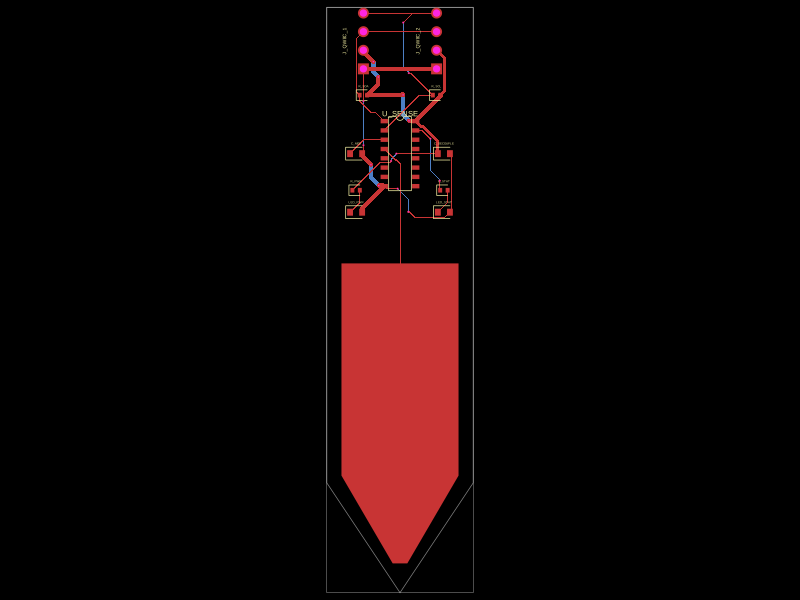 More from this authormohan-bee/soil-finalThis code defines a printed circuit board (PCB) featuring a sensor chip with associated decoupling capacitors, resistors, indicator LEDs with current-limiting resistors, pin headers for external connections, and a custom spear-shaped probe pad.
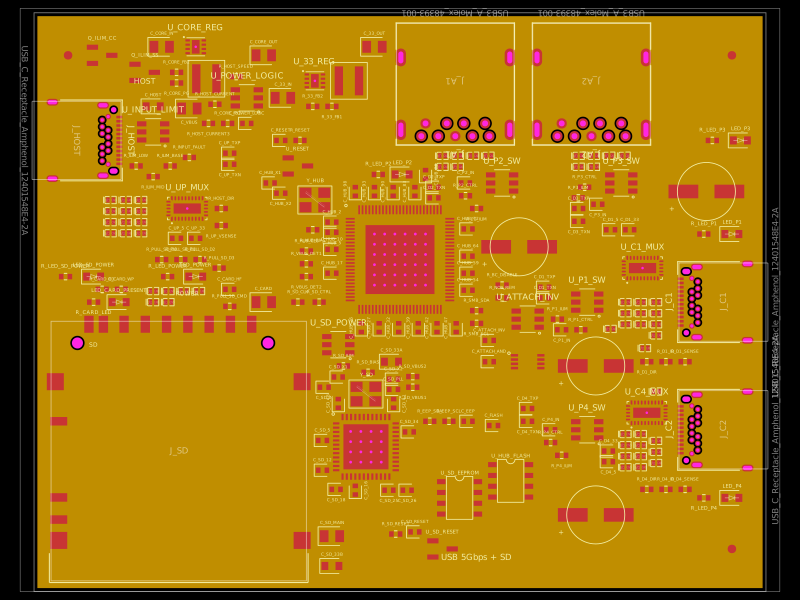 Similar packagegokul/usb3-sd-hubEngineering draft: four-layer, computer-powered USB 3 hub with one USB-C host socket, two USB-C and two USB-A accessory sockets, and a full-size SD slot. Board and three schematic previews are available. Routing and production checks are incomplete; not fabrication ready.
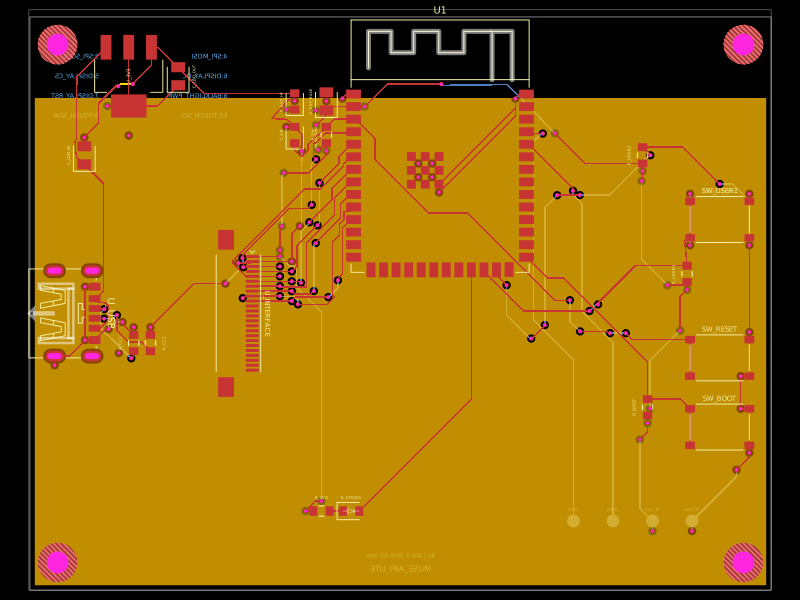 Discover something newShiboSoftwareDev/muse-aipi-lite-replacementA four-layer ESP32-S3 carrier board with USB‑C 5V input, AMS1117 3.3V regulation, FFC display/interface connector, status LED, reset/boot/user buttons, decoupling passives, test points, and ground/power planes.