mohan-bee/fitness-band
A 4-layer BLE wearable mainboard with Li-ion charging/protection, 3.3/1.8 V power regulation, motion and battery sensing, plus a folded 2-layer flex sensor board carrying MAX30102 optical and TMP117 temperature sensors.
- Version
- 0.0.2
- License
- unset
- Stars
- 0
validation/native-routing-notes.md
# Native routing completion

The main tscircuit build fails before completing routing (P6). Its current footprint/pin netlist and critical manual regulator/SWD traces were exported to KiCad. Local Freerouting 2.5.0 was used for initial signal routing, with the In1 ground plane reserved. Remaining airwires were completed locally, adding surface escapes and ground-plane vias. Critical exported manual routes were retained; the final design is the editable native main.kicad_pcb.

All added routing was checked by KiCad's copper, drill, board-edge and connectivity DRC. The independent source/native comparison checks 190 main and 41 flex SMT pad positions and named net assignments, plus consistency of unnamed connectivity groups. It does not rely on the failed source router declaring success.

Fine-pitch main neckdowns down to approximately 0.112 mm are within the declared 0.10 mm process minimum. Ordinary signal routes remain 0.15 mm; hand-defined power switching routes remain 0.30 mm. The ground plane is continuous apart from necessary antipads, holes and the antenna reserve. Rendered final-native copper/ground previews were inspected.

The flex source build passes. Its native export is normalized for exact duplicate vias/segments and the two closely spaced same-net via pairs recorded separately. Coverlay, stiffener, contact-paste exclusions and charger stencil details are fabrication finishing operations. Native DRC is rerun after those operations. The coverlay windows are additional mechanical artwork and are reviewed separately from native solder-mask rules.

Do not apply an intermediate router session or a new raw tscircuit export over the frozen boards. The release manifest identifies the actual native files used to generate fabrication outputs.
Related Packages
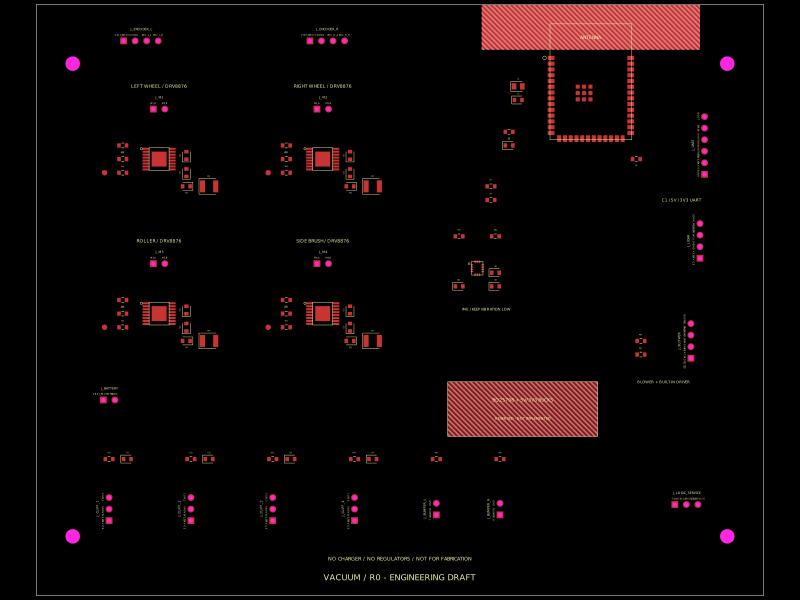 More from this authormohan-bee/tscircuit-robot-vacuum
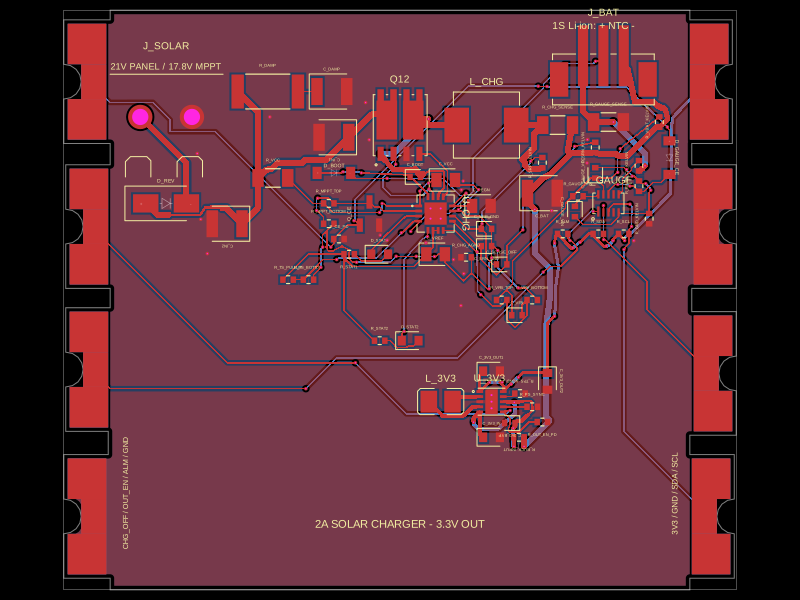 Similar packageShiboSoftwareDev/solar-battery-charger-moduleThis hardware setup integrates a solar panel, a lithium-ion battery, and a multi-rail buck converter with a battery charging IC, protection circuitry, and monitoring components, enabling solar power harvesting, battery charging, and power distribution in an embedded system.
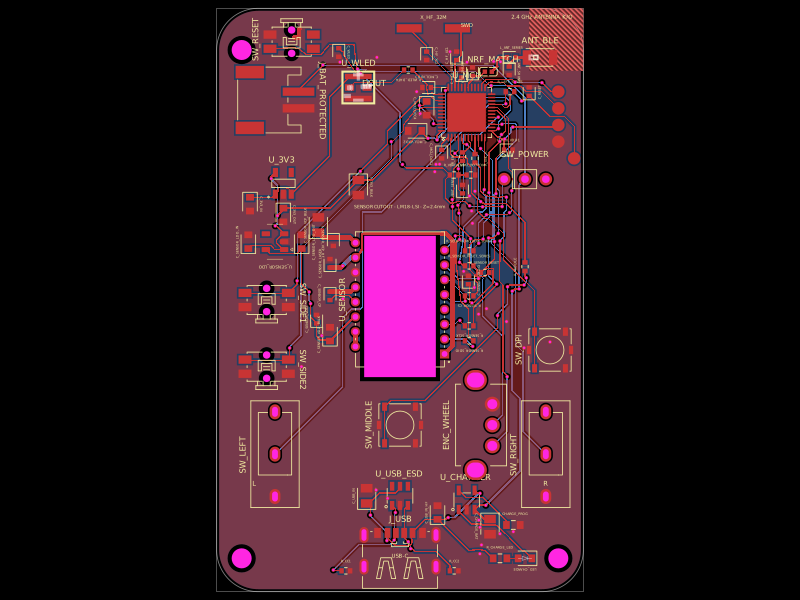 Discover something newMustafaMulla29/wireless-mouse-pcb