anil08607/Smartwatch
A 46 mm smartwatch PCB built around an nRF52810 BLE MCU, with USB‑C PD/Li‑ion charging, buck‑boost power, LCD, accelerometer, RTC, buttons, haptic motor, crystals, antenna, and SWD programming connector.
- Version
- 1.0.14
- License
- unset
- Stars
- 0
firmware/README.md
# Firmware integration contract

This directory defines the hardware interface; a tested smartwatch application is not supplied. The hardware release remains held until a real image is built, flashed and measured on this PCB.

Use nRF52810 QFAA (192 KiB flash, 24 KiB RAM), 32 MHz HFXO, 32.768 kHz LFXO and internal LDO. Keep `DCDCEN=0`: DCC has no external converter inductor. Configure both UICR PSELRESET registers for P0.21 only when programming this board. Initial programming and recovery use J3 SWD, not USB.

`pins.h` is the authoritative GPIO mapping. Use external pull-ups on the shared I2C bus. Devices: BMA456 0x18, PCF8563 0x51 and BQ25180 0x6A (7-bit addresses). Load the Bosch BMA456 configuration using its official driver. Set both button GPIOs as inputs and haptic/backlight control low before enabling outputs.

GC9A01A is a 240 x 240 RGB565 SPI display. A full 115,200-byte framebuffer cannot fit in the 24,576-byte RAM. Use bounded line/tile buffers (for example two 480-byte lines), and measure linked BLE-stack RAM/flash usage. Do not enable a generic full-framebuffer GUI configuration.

Read BQ25180 registers before changing limits. Initially cap charge current at 100 mA and battery regulation at 4.2 V; retain TS monitoring with the bonded 10 kohm NTC. Verify input current, thermal regulation, watchdog behavior, open/short NTC faults and battery removal. Firmware must never defeat TS faults to enable charging. The exact pack supplier's charge-temperature window takes precedence.

Battery ADC is P0.02/AIN0 through 1 Mohm / 330 kohm with 100 nF. Account for the 1.33/0.33 divider, ADC gain/reference and settling time; calibrate against a DMM. The main rail is nominal 3.05 V, not the LiPo voltage. Keep the motor off by default, limit haptic pulse duration, and use PWM for brightness.

Required acceptance: BLE advertising/connect/disconnect/recovery; display colour and orientation; both buttons; BMA interrupts; RTC retention; battery ADC accuracy; charge/temperature faults; sleep and active current; watchdog; recovery after fully discharged pack; and a flash/readback hash record. No firmware binary or measured runtime is claimed yet.
Related Packages
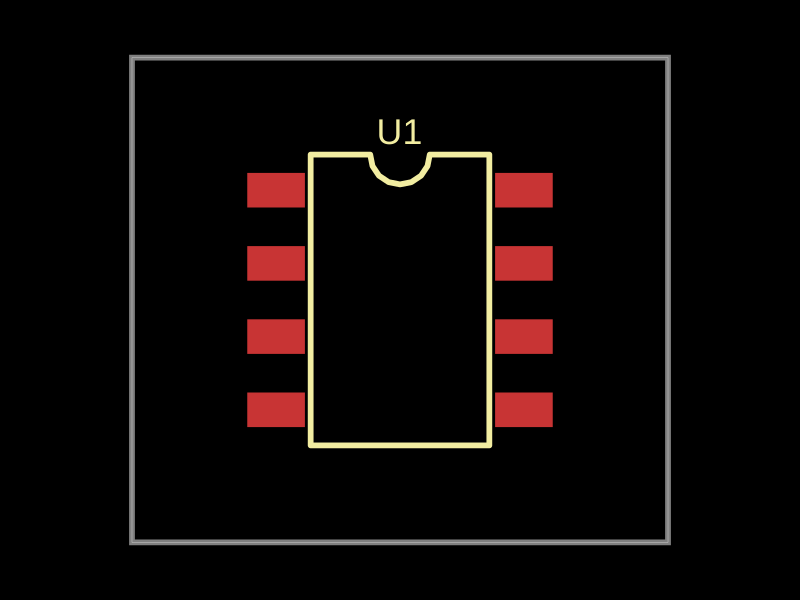 More from this authoranil08607/issue1This code defines a schematic diagram of a DS3231MZ real-time clock (RTC) integrated circuit connected to a 3.3V power supply, I2C data lines, and control signals on a PCB.
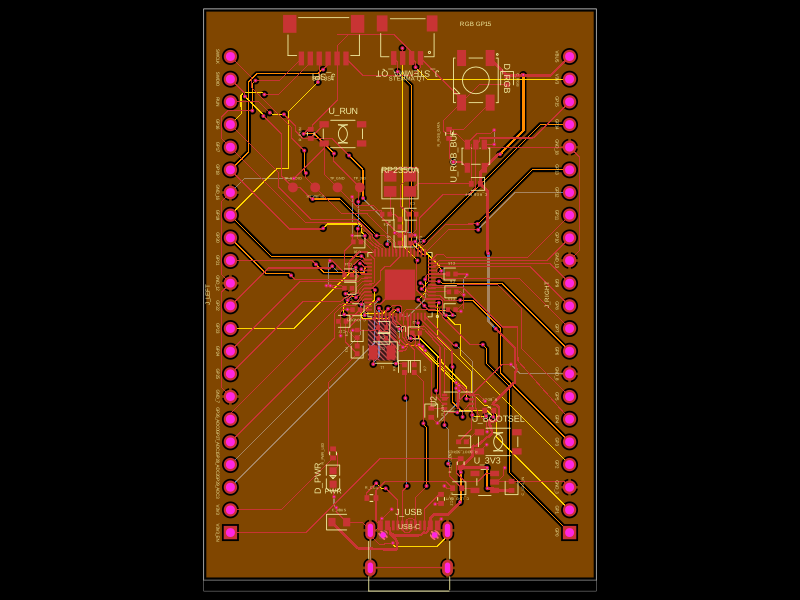 Similar packageabse/rp2350-mcu-boardThis code defines a compact, four-layer PCB hardware layout for the Raspberry Pi RP2350A microcontroller module, including the main IC, power regulation, USB-C connector, STM32-compatible headers, and associated passive components, with detailed component footprints, net connections, and copper pour zones for powering and ground references.
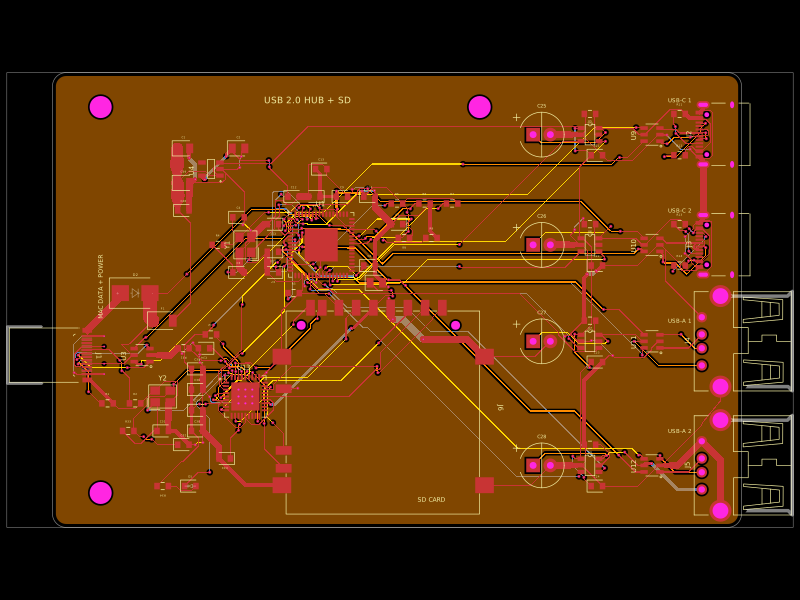 Discover something newgokul/usb-hub-boardA 4-layer 100×66 mm USB 2.0 hub board with a USB‑C upstream port, four protected downstream USB‑C/USB‑A ports, an integrated SD card reader, USB hub controllers, 3.3 V regulation, ESD protection, current-limited power switches, crystal oscillators, and filtering/passive components.