AnasSarkiz/rp2040-bldc-servo-controller
RP2040-based motor-control board integrating a DRV8316 three-phase gate driver, AS5047P magnetic position sensor, USB-C power/communications, STUSB4500 USB-PD controller, SPI flash, and THVD1450 RS-485 transceiver.
- Version
- 0.0.5
- License
- unset
- Stars
- 0
scripts/power-envelope.py
"""Screen the USB PD power envelope. This is not a converter simulation."""

import json
from pathlib import Path


def screen_operating_point(operating_point, assumptions):
    input_voltage = operating_point["input_voltage_v"]
    output_current = operating_point["output_current_a"]
    output_voltage = assumptions["output_voltage_v"]
    output_power = output_voltage * output_current
    boost_input_current = output_power / (assumptions["boost_efficiency_assumed"] * input_voltage)
    total_input_current = boost_input_current + assumptions["other_load_power_assumed_w"] / input_voltage
    current_limit_low = assumptions["input_current_limit_nominal_a"] * (1 - assumptions["input_current_limit_tolerance_assumed"])
    duty_cycle = 1 - input_voltage / (output_voltage + assumptions["diode_drop_assumed_v"])
    ripple_current = input_voltage * duty_cycle / (assumptions["inductance_min_assumed_h"] * assumptions["switching_frequency_screen_hz"])
    peak_inductor_current = boost_input_current + ripple_current / 2
    input_limited_power = (input_voltage * current_limit_low - assumptions["other_load_power_assumed_w"]) * assumptions["boost_efficiency_assumed"]
    switch_limited_power = (assumptions["switch_current_limit_datasheet_min_a"] - ripple_current / 2) * assumptions["boost_efficiency_assumed"] * input_voltage
    return {
        **operating_point,
        "output_power_w": output_power,
        "total_input_current_a": total_input_current,
        "input_current_budget_margin_a": current_limit_low - total_input_current,
        "inductor_ripple_peak_to_peak_a": ripple_current,
        "peak_inductor_current_a": peak_inductor_current,
        "switch_current_limit_margin_a": assumptions["switch_current_limit_datasheet_min_a"] - peak_inductor_current,
        "screened_max_output_current_a": min(input_limited_power, switch_limited_power) / output_voltage,
        "input_budget_screen_pass": total_input_current <= current_limit_low,
        "switch_current_screen_pass": peak_inductor_current <= assumptions["switch_current_limit_datasheet_min_a"],
    }


def main():
    assumptions = {
        "output_voltage_v": 24,
        "negotiated_current_required_a": 5,
        "input_current_limit_nominal_a": 4.5,
        "input_current_limit_tolerance_assumed": 0.05,
        "other_load_power_assumed_w": 2,
        "boost_efficiency_assumed": 0.90,
        "diode_drop_assumed_v": 0.5,
        "inductance_min_assumed_h": 8e-6,
        "switching_frequency_screen_hz": 460000,
        "switch_current_limit_datasheet_min_a": 5.25,
        "switch_current_limit_datasheet_max_a": 7.75,
    }
    current_limit_low = assumptions["input_current_limit_nominal_a"] * (1 - assumptions["input_current_limit_tolerance_assumed"])
    current_limit_high = assumptions["input_current_limit_nominal_a"] * (1 + assumptions["input_current_limit_tolerance_assumed"])
    assert current_limit_high < assumptions["negotiated_current_required_a"]
    cases = [screen_operating_point({"input_voltage_v": input_voltage, "output_current_a": output_current}, assumptions)
             for input_voltage in [18, 19, 20] for output_current in [1.8, 2, 3]]
    at_18v_3a = next(case for case in cases if case["input_voltage_v"] == 18 and case["output_current_a"] == 3)
    at_18v_2a = next(case for case in cases if case["input_voltage_v"] == 18 and case["output_current_a"] == 2)
    assert not at_18v_3a["input_budget_screen_pass"]
    assert at_18v_2a["input_budget_screen_pass"] and at_18v_2a["switch_current_screen_pass"]
    minimum_input_for_3a = (24 * 3 / assumptions["boost_efficiency_assumed"] + assumptions["other_load_power_assumed_w"]) / current_limit_low
    result = {
        "screening_only": True,
        "candidate": "TPS55340RTER / C169167; imported but blocked by NC metadata defect I-018",
        "source": "TI TPS55340 SLVSBD4E sections 6.5 and 8.2.1; actual parts and operating bounds remain unselected",
        "assumptions": assumptions,
        "assumption_limits": [
            "Efficiency, overhead, board-input range, current-limit tolerance, inductance and diode drop are screening assumptions, not validated component limits.",
            "460 kHz is the datasheet lower frequency at RFREQ=80 kohm; no actual frequency resistor/tolerance is selected.",
            "5.25/7.75 A are internal switch current-limit bounds, not output-current ratings.",
            "Input current limiting, output-short disconnection, hardware interlocks and regenerative braking remain undesigned.",
            "Only a verified 20 V / 5 A contract may enable the motor; 5/9/15 V and inadequate current contracts keep it disabled.",
        ],
        "input_limit_low_a": current_limit_low,
        "input_limit_high_a": current_limit_high,
        "minimum_input_for_24v_3a_under_assumptions_v": minimum_input_for_3a,
        "capacitor_for_1a_500us_0p5v_sag_f": 1 * 500e-6 / 0.5,
        "energy_in_1mf_from_24v_to_28v_j": 0.5 * 1e-3 * (28**2 - 24**2),
        "cases": cases,
        "motor_startup_verified": False,
        "thermal_rating_verified": False,
        "power_design_complete": False,
    }
    Path("evidence/tooling-20261026/power-envelope.json").write_text(json.dumps(result, indent=2) + "\n")
    print(f"Input current limiter assumed range: {current_limit_low:.3f}–{current_limit_high:.3f} A")
    print(f"24 V / 3 A requires board input >= {minimum_input_for_3a:.3f} V under these assumptions")
    print(f"18 V input screening ceiling: {at_18v_3a['screened_max_output_current_a']:.3f} A at 24 V")
    print("Startup, thermal performance and completed protection: NOT VERIFIED")


if __name__ == "__main__":
    main()
Related Packages
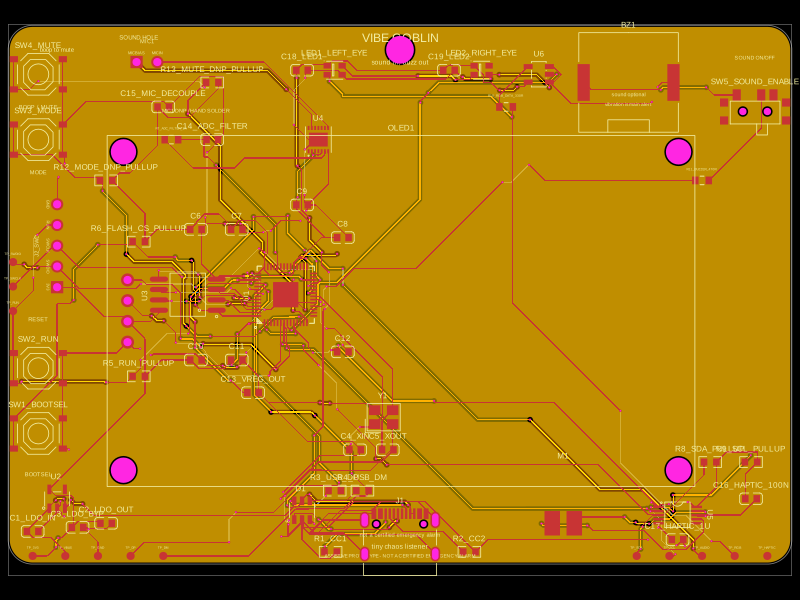 More from this authorAnasSarkiz/vibe_GoblinThese code snippets define various physical electronic components such as ICs, connectors, sensors, LEDs, and chips, specifying their pin layouts, footprint pads, silkscreen markings, courtyard outlines, and 3D CAD models for placement on PCB boards.
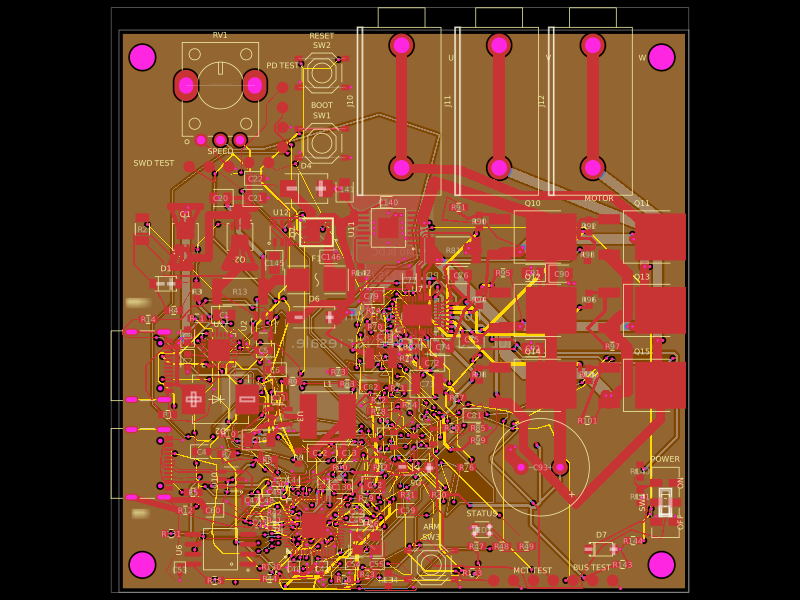 Similar packageMustafaMulla29/rp2040-bldc-motor-controller-new73×72 mm 4-layer USB‑C PD (5/9/15/20 V) RP2040 controller PCB with protected power switching, MCT8329A sensorless BLDC three-phase MOSFET bridge, USB data/programming, onboard controls, and three motor outputs feeding a 2212 motor through rigid bullet adapters.
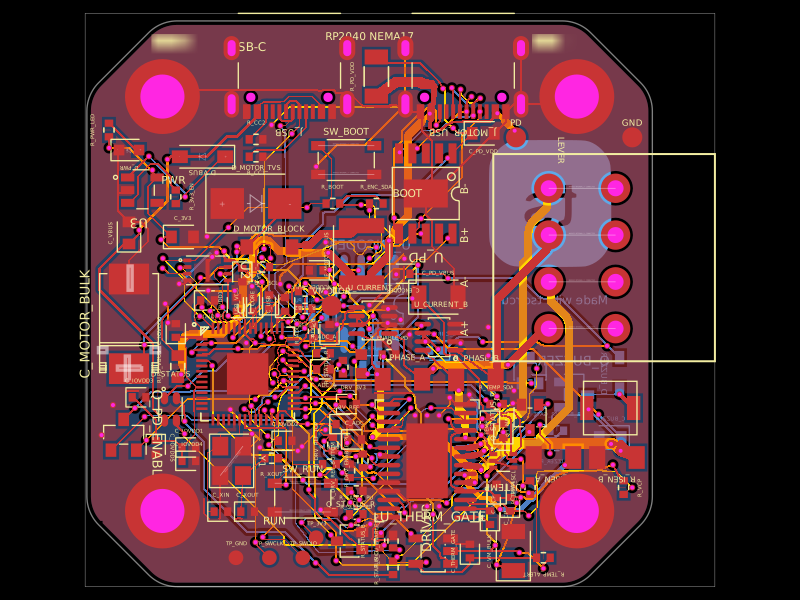 Discover something newastra/nema17-stepper-motor-controller-spring-clamp-rp2040A 4-layer RP2040 controller board that negotiates USB‑C PD motor power and drives a NEMA17 stepper via a DRV8825, with current sensing, thermal shutdown, RGB status LED, buzzer alarm, optional AS5600 encoder, protection/filtering, and test points.