seveibar/rp2040-zero
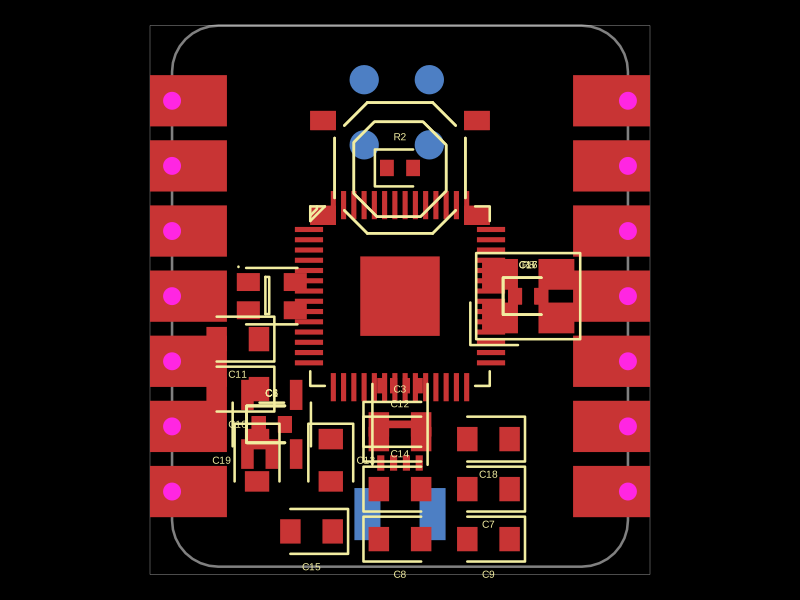
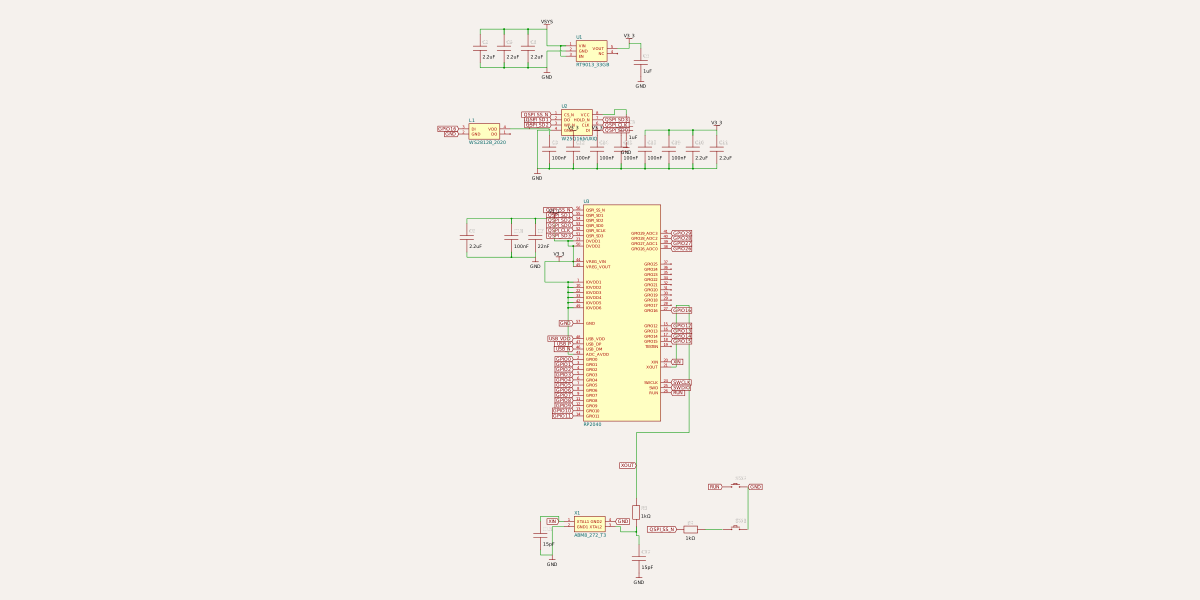
This code defines a hardware schematic with discrete components and modules including voltage regulators, microcontroller (RP2040), flash memory, LEDs, crystal oscillator, and buttons, interconnected through specific pins and footprints for PCB layout.
Usage: To use the RP2040 component from the "@tsci/seveibar.rp2040-zero" package: 1. Import the component: ```tsx import { RP2040 } from "@tsci/seveibar.rp2040-zero/imports/RP2040" ``` 2. Use in a circuit: ```tsx <RP2040 name="U3" connections={{ // Connect pins to nets or other components GPIO0: "net.GPIO0", IOVDD1: "net.V3_3", GND: "net.GND" }} /> ``` Key details: - Supports 57 pins - Pins include GPIO, power, USB, crystal, and debug interfaces - Can be configured with various connections and pin mappings
- Version
- 0.0.18-pr6-2229c6f4
- License
- unset
- Stars
- 1
index.tsx
PCB
Schematic
import { XiaoBoard } from "@tscircuit/common"
import { VoltageRegulator } from "./lib/VoltageRegulator"
import { LedCircuit } from "./lib/LedCircuit"
import { FlashCircuit } from "./lib/FlashCircuit"
import { CrystalCircuit } from "./lib/CrystalCircuit"
import { RP2040Circuit } from "./lib/RP2040Circuit"
import { KeyCircuit } from "./lib/KeyCircuit"

export default () => (
  <XiaoBoard
    variant="RP2040"
    name="J1"
    width="21mm"
    height="17.5mm"
    routingDisabled
    // NOTE: Connections removed - for this breakout board design, we don't need
    // XiaoBoard to create traces since components connect directly to RP2040 pins
    // which then connect to the XiaoBoard pads through the copper traces on the PCB
  >
    {/* Wrap all components in a subcircuit with routing disabled to prevent
        autorouting of internal traces created by component connections */}
    <group subcircuit routingDisabled>
      <VoltageRegulator />
      <LedCircuit />
      <FlashCircuit />
      <CrystalCircuit />
      <KeyCircuit />
      <RP2040Circuit />
    </group>
  </XiaoBoard>
)