pixalynx/usb3-hub-10g
A USB 3.2 Gen 2 six-port hub board with USB-C PD power input, regulated 5 V/3.3 V/1.15 V rails, one upstream and four protected downstream USB-A/USB-C ports, SuperSpeed muxes, ESD protection, and controlled port power.
- Version
- 0.0.1
- License
- unset
- Stars
- 0
lib/geometry.ts
/** Small PCB geometry helpers shared by the three boards.
 *
 * tscircuit `<trace pcbPath>` points are interpreted as offsets from the centre
 * of the component that owns the trace's anchor pad (the `from` pad unless
 * `pcbPathRelativeTo` names another port), rotated by that component's
 * `pcbRotation`. Board-frame coordinates therefore have to be converted before
 * they are handed to a trace. `toLocal` does that conversion.
 */
export type Pt = { x: number; y: number }

export function toLocal(p: Pt, centre: Pt, rotationDeg = 0): Pt {
  const dx = p.x - centre.x, dy = p.y - centre.y
  const a = (-rotationDeg * Math.PI) / 180
  const c = Math.cos(a), s = Math.sin(a)
  return { x: +(dx * c - dy * s).toFixed(4), y: +(dx * s + dy * c).toFixed(4) }
}

type Layer = "top" | "bottom" | "inner1" | "inner2" | "inner3" | "inner4"
type PathPt = Pt & { via?: boolean; fromLayer?: Layer; toLayer?: Layer }

/** Two tscircuit copper-pour traps, both of which leave a pour flooding over foreign copper (a short):
 * 1. a pcbPath via only gets the layers between its from and to layer, and the pour solver cuts antipads on those
 *    layers alone, yet every via here is drilled through: a bottom->inner2 signal via would sit bare in the top and
 *    inner1 GND pours. So each via is authored as a full top->bottom via, followed (same spot) by a bottom->target
 *    step when the trace continues on another layer.
 * 2. the pour solver only treats runs of consecutive *wire* points as trace obstacles; a via point ends the run, so a
 *    pad->via or via->next-point segment is invisible to it. A wire point is therefore added on the via, on both
 *    sides (zero-length hops, same copper). */
export function throughVia<T extends PathPt>(p: T): PathPt[] {
  if (!p.via) return [p]
  const out: PathPt[] = [{ x: p.x, y: p.y }, { x: p.x, y: p.y, via: true, fromLayer: "top", toLayer: "bottom" }]
  if (p.toLayer && p.toLayer !== "bottom") out.push({ x: p.x, y: p.y, via: true, fromLayer: "bottom", toLayer: p.toLayer })
  out.push({ x: p.x, y: p.y })
  return out
}
export const throughVias = (points: PathPt[]) => points.flatMap(throughVia)

/** Convert a board-frame polyline (optionally with layer changes) into pcbPath entries (vias drilled through). */
export function localPath(points: (Pt & { via?: boolean; toLayer?: Layer })[], centre: Pt, rotationDeg = 0) {
  return points.flatMap((p) => throughVia({ ...toLocal(p, centre, rotationDeg), ...(p.via ? { via: true, toLayer: p.toLayer } : {}) }))
}

export const round = (v: number, d = 3) => +v.toFixed(d)
Related Packages
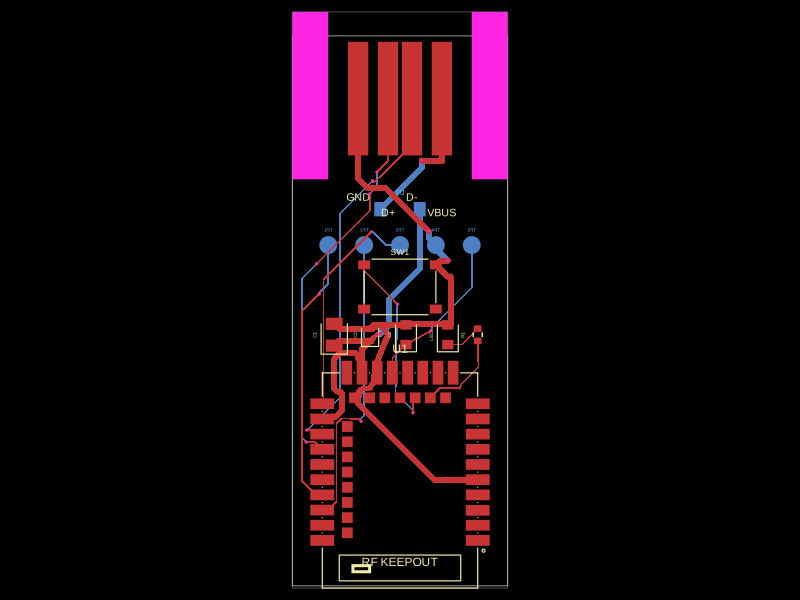 More from this authorpixalynx/keyboardThis code defines the physical layout and key components of a USB-C dongle featuring an nRF52840 microcontroller with antenna, USB-A connector, status LED, pair button, firmware debug test points, and associated passive components and interface connectors.
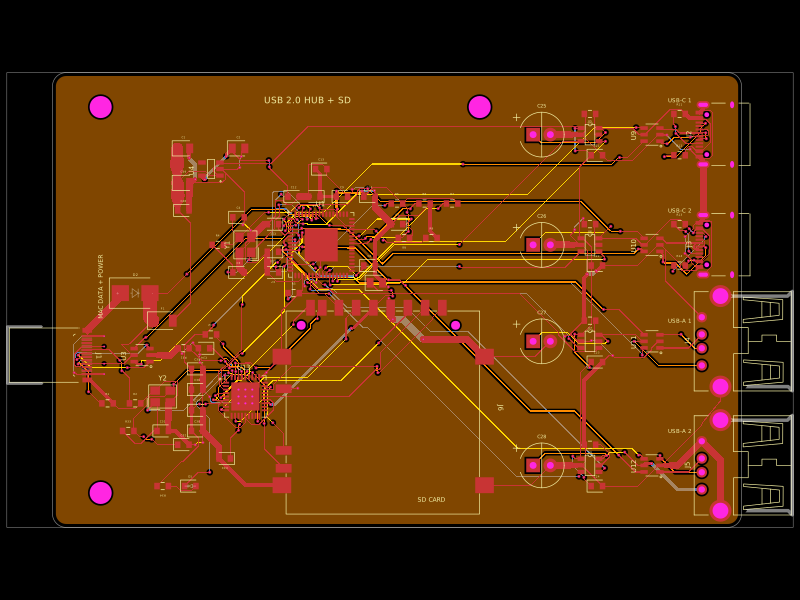 Similar packagegokul/usb-hub-boardA 4-layer 100×66 mm USB 2.0 hub board with a USB‑C upstream port, four protected downstream USB‑C/USB‑A ports, an integrated SD card reader, USB hub controllers, 3.3 V regulation, ESD protection, current-limited power switches, crystal oscillators, and filtering/passive components.
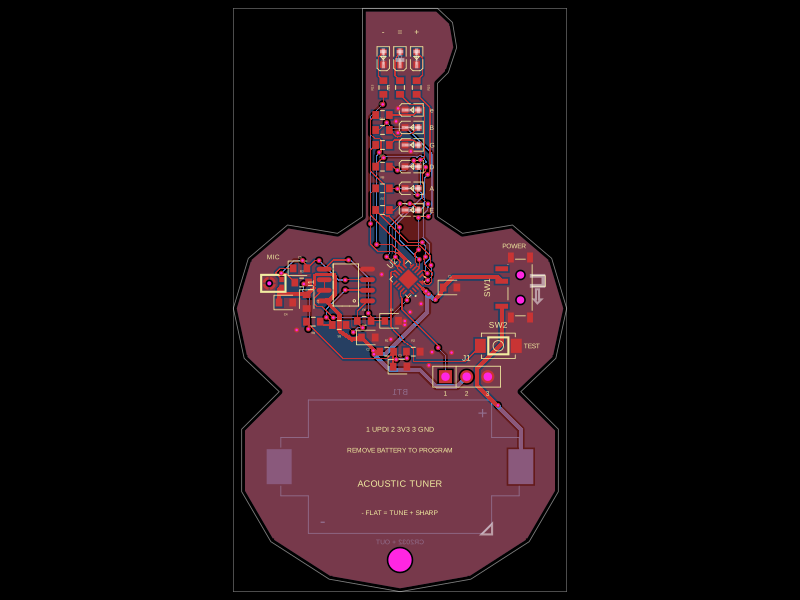 Discover something newgokul/acoustic-guitar-tunerThis code defines the physical pin configuration and footprint layouts for the ATtiny1616 microcontroller and a matching tactile switch component, including their key hardware connection points, dimensions, and 3D models.