astra/am3352-sbc
A 4-layer AM3352 single-board computer with 128‑MiB DDR3, PMIC power regulation, USB‑C 5‑V PD input, dual USB host ports, HDMI output with ESD protection, microSD/UART/JTAG interfaces, addressable RGB indicators, and a PWM-driven buzzer.
- Version
- 0.1.19
- License
- unset
- Stars
- 0
design/peripheral-router.ts
import { BusLanesPipelineSolver, pairLengthReports, exteriorPairSpacingReports, type SimpleRouteJson } from "@tscircuit/bus-lanes-solver";
import { compactRoutingInput } from "./compact-routing-input";
import { writeFileSync } from "node:fs";

/** Board-world points in mm, +X right and +Y up. Preserve fixed DDR copper;
 * use inner signal layers with only local top-pad escapes for new pairs. */
export async function peripheralBusLanes(input: SimpleRouteJson) {
  const prepared = compactRoutingInput(structuredClone(input));
  prepared.obstacles = prepared.obstacles.filter(o => !(o as any).isCopperPour);
  prepared.allowedLayers = ["inner1", "inner2"];
  writeFileSync("output/peripheral-pairs.srj.json", JSON.stringify(prepared));
  const solver = new BusLanesPipelineSolver(prepared, { maxSearchIterations: 2_000_000, maxLaneIterations: 1_000_000 });
  const handlers: Record<string, ((event: any) => void)[]> = {};
  const emit = (type: string, event: object) => handlers[type]?.forEach(fn => fn({ type, ...event }));
  const finish = () => {
    solver.tryFinalAcceptance();
    if (!solver.solved) throw new Error(solver.error ?? "Peripheral pair routing did not complete");
    const pairs = pairLengthReports(prepared, solver.traces);
    const coupling = exteriorPairSpacingReports(prepared, solver.traces);
    writeFileSync("output/peripheral-pairs.result.json", JSON.stringify({ solved: solver.solved, pairs, coupling, traces: solver.traces }, null, 2));
    if (solver.traces.length !== prepared.connections.length || pairs.some(p => !p.matched) || coupling.some(p => p.applicable && !p.matched))
      throw new Error("Peripheral pairs failed complete routing, skew, or coupling validation");
    return solver.traces;
  };
  return {
    input, isRouting: false,
    on(type: string, fn: (event: any) => void) { (handlers[type] ??= []).push(fn); },
    stop() { this.isRouting = false; solver.tryFinalAcceptance(); },
    async start() {
      this.isRouting = true;
      const started = performance.now(); let nextLog = started + 15000;
      try {
        while (this.isRouting && !solver.solved && !solver.failed && performance.now() - started < 300000) {
          const until = performance.now() + 30;
          do { solver.step(); } while (!solver.solved && !solver.failed && performance.now() < until);
          if (performance.now() > nextLog) { console.log(JSON.stringify({ router: "peripheral_bus_lanes", phase: solver.phase, iterations: solver.iterations, seconds: (performance.now() - started) / 1000 })); nextLog += 15000; }
          await new Promise(resolve => setTimeout(resolve, 0));
        }
        if (!this.isRouting) return;
        this.isRouting = false;
        emit("complete", { traces: finish() });
      } catch (error) { this.isRouting = false; emit("error", { error }); }
    },
    solveSync() { solver.solve(); return finish(); },
  };
}
Related Packages
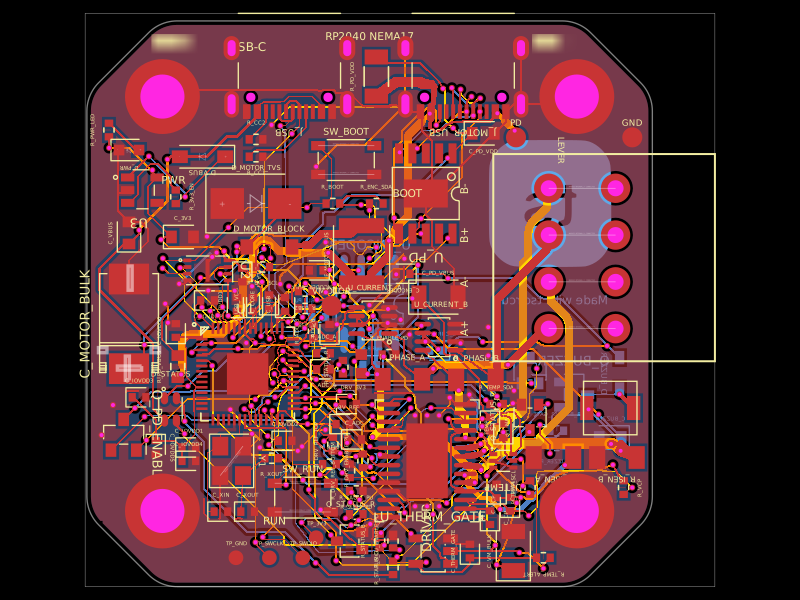 More from this authorastra/nema17-stepper-motor-controller-spring-clamp-rp2040A 4-layer RP2040 controller board that negotiates USB‑C PD motor power and drives a NEMA17 stepper via a DRV8825, with current sensing, thermal shutdown, RGB status LED, buzzer alarm, optional AS5600 encoder, protection/filtering, and test points.
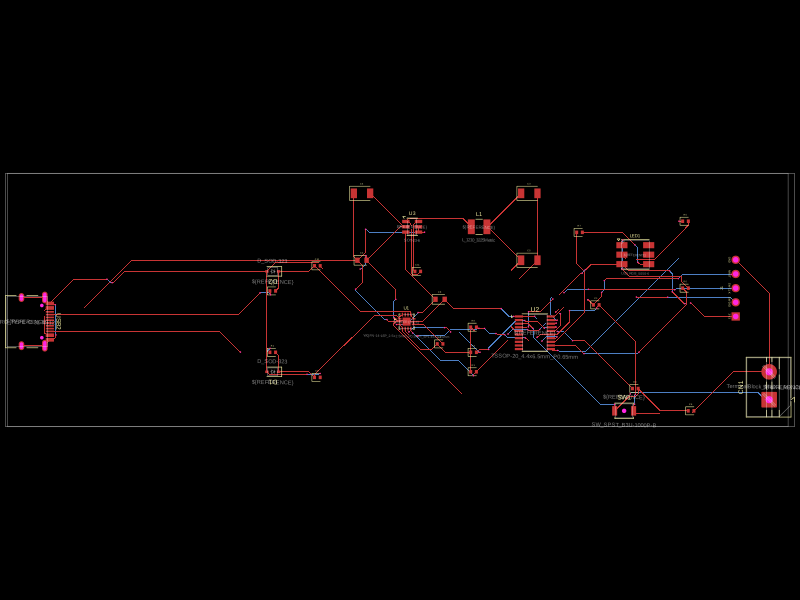 Similar packageaura/diy-power-delivery-triggerThis hardware design implements a USB Type-C port with supporting power management and signal conditioning components, including a USB-C connector, a FUSB302 USB-C port controller, ESD protection diodes, a buck converter for 3.3V power regulation, an STM32 microcontroller for control and processing, an RGB LED indicator, push button, terminal block connections, and associated filtering and support components.
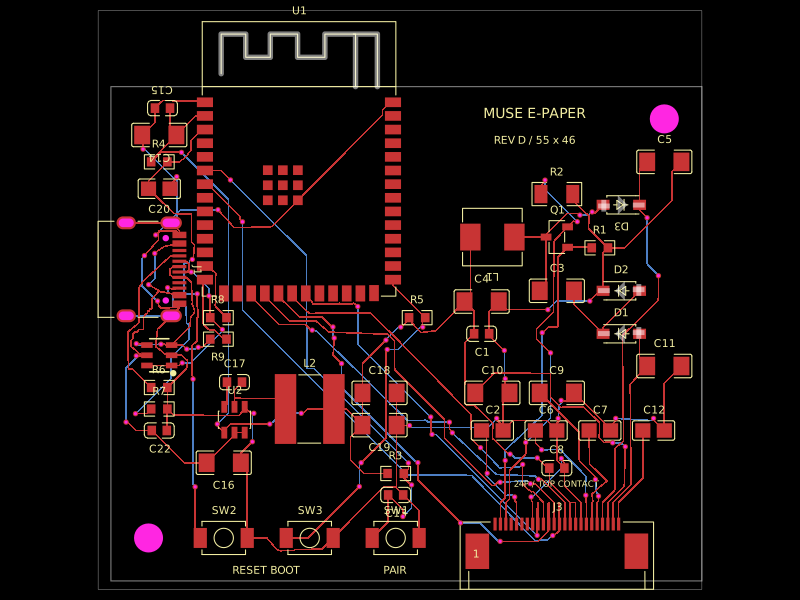 Discover something newmuse/esp32-eink-displayA 55×46 mm two-layer ESP32-S3 e-paper controller board with USB‑C power/programming, buck regulation, FPC display connector, UC8179-style boost/charge-pump circuitry, ESD protection, controls, and routed passive components.